Generative AI is great for marketing stuff provided you have a marketing process that works to begin with.
ChatGPT isn’t great at figuring out how to market something. It’s an excellent tool for following instructions and doing the grunt work in a process, but you need to know what your process is.
For example, I asked GPT-4 to write an Instagram bio for a company that sells baby socks. This is what I got:
🧦👶 Tiny Toes, Big Style! | Adorable & Comfy Baby Socks 🌈 | Eco-friendly Materials 🌍♻️ | Perfect Gift for Little Feet 🎁 | #TinyToesSocks | Shop Now👇🛍️
On the surface, this looks amazing. It’s incredible that a machine can write stuff like this.
Then if you think about it for a moment, from the perspective of someone who risked their life savings to set up a company dedicated to selling a certain standard of tiny inner footwear: This bio doesn’t tell me what’s different about this particular children’s sock company.
It doesn’t tell me anything unique about this company or why it exists. It gave me the most predictable, generic bio possible by averaging out what every other children’s sock company says about themselves.
This is what you would get if you hired an intern who knows nothing about your company and asked them to write your Instagram bio.
The point is that there are rules and guidelines for writing a good bio. And there is specific information about your company that needs to go into the process for something great to come out the other end.
If you have a good process for writing bios, or newsletters or Facebook ads (and you also know what makes your company special) then ChatGPT will do wonders for you.
Let’s look at writing Facebook Ads.
Mo Junayed is the co-founder and the head of creative strategy at Groth Digital, a marketing firm that helps e-commerce businesses grow with Facebook ads.
His process for writing ads starts with understanding what problem a product solves.
What are some of the problems [product you are trying to sell] solve?
Then he picks the problem that resonates the most and fleshes it out a bit.
Elaborate on problem [relevant number from the list of problems]
Then he builds a picture of the kind of person that is likely to have this problem.
What would be an ideal customer avatar that would purchase the [product] to solve the above problem
This step is just ChatGPT’s best guess. Separating out this step means that you can take the output and update it with information from actual customer research or insights you have from experience in the domain. Then you can take all that information and turn it into a persona.
Create an ideal customer avatar based on the information above
When you’re not happy with a result, a simple trick that lots of people use is they just ask ChatGPT to pretend to be an expert at the task and then re-run the prompt.
Consider yourself an advanced marketer who has been advertising for decades, recreate the ideal customer avatar considering the information that we are trying to sell to [insert target audience]
It’s strange that this works so well.
Once you have a persona, you can start fleshing out your sales pitch.
Write a sales letter to [avatar] using principles from breakthrough advertising and principles from David Ogilvy on copywriting.
Notice how Mo infuses this step in his process with its own process. You don’t have to use Ogilvy’s principles. You can use any process or principles you want, and you’ll get a better result than you would asking for a generic sales letter.
Now that you have a sales pitch in place, you can cut it down to size for whatever platform your want to advertise on.
Turn this sales letter into an ad script that would work on TikTok and uses millennial language
If you’re not happy with the result you can run it through other frameworks for sales copy.
Rewrite the ad script using the problem, agitate, solution framework, a script that is enough for a 45-second video and make it more persuasive.
If you’re still not happy, specify why.
Rewrite the ad script using the problem agitate solution framework, keep in mind that the person is frustrated and has used multiple products and [alternative solutions] and has found [product you are trying to sell] to be the best solution because the results are instant.
This sequence of prompts actually worked.
Mo ran four different ad variations on Facebook and got an average click-through rate of 1.51% . This was just a sliver above average for Mo, showing that the ad was as effective as ads run without ChatGPT. The difference is that this set of 9 prompts only took Mo 5 minutes to run through.
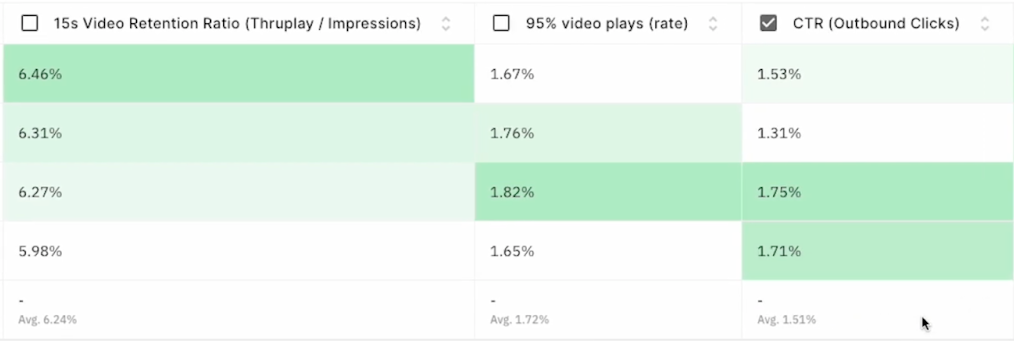
The point here is that ChatGPT isn’t great at figuring out how to market your marketing for you. Mo didn’t just ask ChatGPT to create vanilla copy for a Facebook Ad. He clearly understood the product he was selling and had a specific process for making Ads based on years of experience.
AI is a fantastic tool for helping small businesses market themselves, provided they understand what makes their business special and have processes for marketing that work—with these in place, ChatGPT can follow instructions and do the grunt work to speed your marketing efforts up.
I’ll leave you with another example of a great process for putting a newsletter together by Jens Lennertsson.
 Josh Pitzalis